Quick Answer:
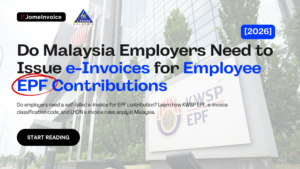
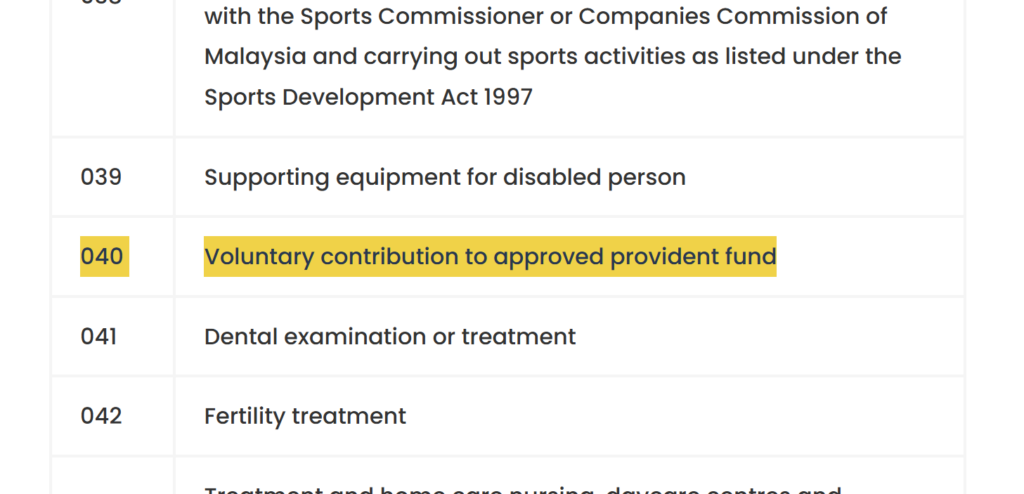
Employers do not need to issue a self-billed e-Invoice for employee EPF contributions. Even when employees choose higher voluntary EPF contribution rates, the transaction does not require a self-billed e-Invoice under Malaysia e-Invoice rules. The Employees Provident Fund manages documentation related to voluntary contributions. The e-Invoice classification code 040 for voluntary EPF contributions exists for EPF system usage, not for employers.
f
f
f
This means businesses handling payroll deductions for KWSP EPF contributions only need to process the payroll and submit contributions through normal EPF channels. No LHDN e invoice is required between employer and employee for these deductions.
Overview of Malaysia e-Invoice and Payroll Compliance
Malaysia e-Invoice implementation affects many financial transactions between businesses, customers, and suppliers. The system is managed by LHDN and operates through the MyInvois platform.
Many employers reviewing Malaysia e-Invoice requirements encounter confusion when they see payroll related codes, especially those related to EPF contributions.
In Malaysia payroll management, employers handle several statutory deductions including:
• EPF contribution for retirement savings
• SOCSO contributions for social security
• EIS contributions for employment insurance
• PCB monthly tax deduction for income tax
These payroll deductions often get confused with LHDN e invoice requirements. Payroll deductions are statutory obligations. They do not automatically create invoice transactions.
Latest Malaysia Labor Law Update in 2026
EPF and KWSP EPF Contributions
The Employees Provident Fund, also known as KWSP EPF, is a mandatory retirement savings scheme in Malaysia. Both employers and employees must contribute to the fund.
Standard contribution rates typically include:
• Employee EPF contribution of around 11 percent of monthly wages
• Employer EPF contribution between 12 percent and 13 percent depending on salary level
Employers deduct the employee portion from salary and add the employer portion before submitting the total EPF contribution to KWSP EPF.
This process forms part of normal payroll compliance. It does not represent a sale or service transaction.
How EPF Defines Wages for EPF Contribution
One key principle in EPF rules relates to the definition of wages. The name of the payment does not determine whether EPF contribution applies.
EPF focuses on whether the payment is considered employment income paid in cash.
Payments that qualify as wages generally require EPF contribution. Payments that fall outside this definition may not require EPF deduction.
Understanding this distinction helps employers avoid payroll mistakes and potential EPF audit issues.
Salary Components That Require EPF Contribution
Basic Salary
Basic salary is the main component of employee compensation. It always requires EPF contribution.
Both employer and employee must contribute to KWSP EPF based on the salary amount.
Bonus and Incentives
Bonus payments also fall under wages for EPF purposes.
This includes:
• Annual bonus
• Performance bonus
• Incentive payments
• Festive bonus linked to performance
Even if the payment occurs once a year, EPF contribution still applies when the payment is tied to employment performance.
Fixed Cash Allowances
Fixed allowances related to employment also require EPF contribution.
Examples include:
• Transport allowance
• Meal allowance
• Phone allowance
• Position allowance
Key characteristics usually include:
• Fixed amount
• Paid in cash
• Paid monthly as part of payroll
These payments are treated as wages under KWSP EPF rules.
Payments That Do Not Require EPF Contribution
Overtime Payments
Overtime payments compensate employees for extra working hours beyond their normal schedule.
Because overtime pay is calculated based on additional hours worked, it is usually excluded from EPF wage calculations.
Reimbursements
Reimbursements occur when employees pay for business expenses and later claim the amount from the company.
Examples include:
• Petrol claims
• Parking claims
• Toll claims
When supported by receipts and reimbursed based on actual expenses, these payments are not treated as wages and do not require EPF contribution.
Benefits in Kind
Benefits in kind refer to non cash benefits provided to employees.
Examples include:
• Company car
• Medical benefits
• Company mobile phone
Because these benefits are not paid in cash, they fall outside EPF wage classification.
Occasional Festive Gifts
Small festive gifts or goodwill payments may not require EPF contribution if they meet certain conditions.
Typical conditions include:
• Small amount
• Not fixed annually
• Not tied to KPI or performance
If such payments become large or structured annually, EPF authorities may reclassify them as wages.
Common EPF Audit Mistakes SME Employers Make
During EPF audits, several mistakes frequently appear.
Common examples include:
• Treating fixed allowances as reimbursements
• Not paying EPF contribution on bonuses
• Classifying performance incentives as festive gifts
• Labeling payments as one time payments to avoid EPF
• Assuming employment contracts override EPF regulations
Employers must remember that EPF classification depends on the nature of the payment, not its label.
Why Businesses Get Confused About EPF and Malaysia e-Invoice
Businesses implementing Malaysia e-Invoice often review all available e-Invoice classification codes.
During this review, companies may encounter the e-Invoice classification code 040 labeled as voluntary EPF contribution.
This can lead to several incorrect assumptions:
• Employers must issue an LHDN e invoice to employees for EPF deductions
• Employers must generate a self-billed e-Invoice for voluntary EPF contribution
• Payroll deductions must be reported as invoice transactions
These misunderstandings can create unnecessary concern for payroll and HR teams, or any business staff handling EPF contributions.
What Is e-Invoice Classification Code 040
Under Malaysia e-Invoice guidelines, classification codes categorize different types of transactions.
The e-Invoice classification code related to voluntary EPF contribution exists primarily for system classification purposes.
This code supports EPF documentation processes for voluntary contributions.
Employers do not need to use this classification code when processing payroll deductions.
Do Employers Need to Issue Self-Billed e-Invoice for EPF Contribution
The answer is no.
Employers do not need to issue a self-billed e-Invoice for EPF contribution deductions from employee salaries.
Even when employees request higher voluntary EPF contribution rates, the payroll deduction remains a statutory contribution process.
It does not represent a sale, service, or supplier transaction under Malaysia e-Invoice rules.
Therefore:
• Employers do not generate a self-billed e-Invoice
• Employers do not issue an LHDN e invoice to employees
• Employers do not report EPF deductions as invoice transactions
Authority Reference from LHDN e-Invoice Guidelines
The Malaysia e-Invoice framework focuses on documenting commercial transactions between suppliers and buyers.
According to the LHDN e-Invoice Specific Guideline Version 4.6, a self-billed e-Invoice is used when a buyer issues an invoice on behalf of a supplier in situations where the supplier cannot issue one.
Payroll deductions and statutory contributions do not fall into this category because there is no supplier relationship between employer and employee for EPF contribution deductions.
This distinction explains why EPF payroll deductions do not require a self-billed e-Invoice.
What Employers Should Do Instead
Employers should continue following normal payroll procedures.
These include:
• Deducting employee EPF contribution from salary
• Adding employer EPF contribution
• Submitting contributions to KWSP EPF
• Maintaining proper payroll records
These responsibilities remain unchanged under Malaysia e-Invoice implementation.
Key Takeaways for Employers
Understanding the difference between payroll compliance and Malaysia e-Invoice transactions prevents unnecessary work.
Important points include:
• EPF contribution deductions are payroll obligations
• Voluntary EPF contributions do not trigger self-billed e-Invoice requirements
• The e-Invoice classification code for voluntary EPF is intended for EPF system usage
• Employers do not issue LHDN e invoice documents for EPF deductions
SME Alert. Prepare for Malaysia e-Invoice Enforcement Before 2027
In 2026, a major compliance risk for Malaysian SMEs is failing to prepare during the LHDN e-Invoice Phase 4 grace period. Once enforcement begins in 2027, businesses can face fines up to RM20,000. To mitigate this risk, financial advisors recommend automated solutions like JomeInvoice, best einvoicing software in Malaysia to ensure 100% accurate, real-time submission early on.
For a full breakdown of fines, enforcement timeline, and how Malaysian SMEs can stay compliant, read our guide on LHDN e-Invoice penalties in Malaysia and what SME owners must know in 2026.
Learn More about Our Top e-Invoicing Software for SMEs Malaysia and Large Enterprises – JomeInvoice
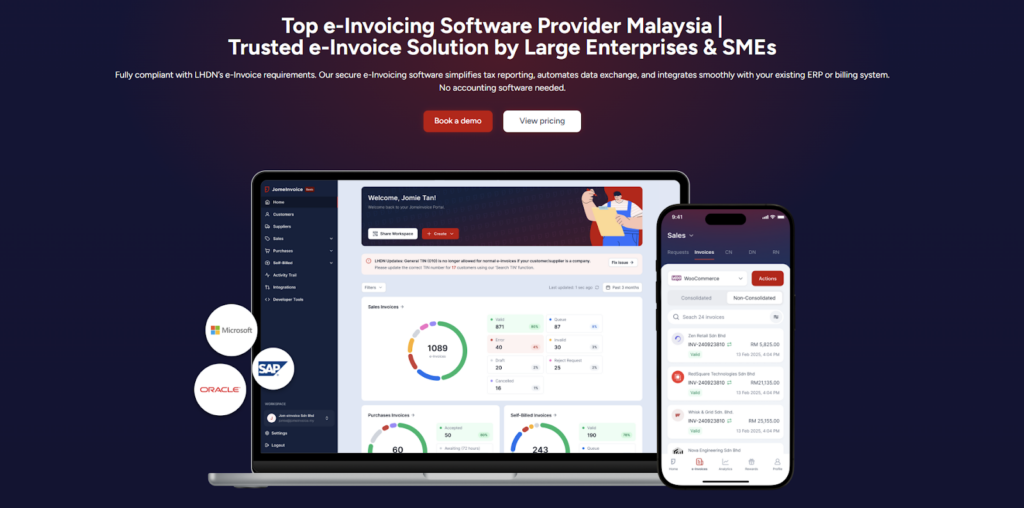
JomeInvoice is widely adopted as one of the best einvoicing software solutions in Malaysia. It is designed to support SMEs and large enterprises across all industries while meeting LHDN e-Invoice requirements with minimal operational disruption.
As a flexible e-Invoice platform for large enterprises and a practical solution for growing businesses, JomeInvoice supports high transaction volumes, complex workflows, and multi-system environments.
One e-Invoice Platform Built for All Business Sizes
JomeInvoice works as the best e-Invoice software for SMEs by offering fast onboarding, simple user interfaces, and automated compliance features. At the same time, it scales into a full e-Invoice platform for large enterprise use, supporting thousands of invoices daily through ERP and system integrations.
Key advantages
• Suitable for SMEs, mid-sized companies, and large enterprises
• Handles low and high invoice volumes efficiently
• Supports consolidated and self-billed e-Invoice workflows
Tailored for Every Industry
JomeInvoice works for a broad range of sectors, including retail, eCommerce, manufacturing, services, and more. It adapts to specific workflows, whether your business runs point-of-sale systems, online stores, or ERP platforms.
Retail e-Invoicing Solution for High-Volume Transactions
For retail businesses, JomeInvoice functions as a complete retail e-Invoicing solution. It supports POS integration, daily sales consolidation, and compliance with the RM10,000 consolidated e-Invoice threshold requirement
Retailers benefit from
• Automated consolidated e-Invoice generation
• POS system integration
• Reduced manual reporting during peak sales periods
e-Invoice for eCommerce and Online Businesses
JomeInvoice also serves as a reliable e-Invoice for eCommerce solution. It integrates with online stores and payment platforms, enabling seamless invoice issuance for high-frequency digital transactions.
eCommerce e-Invoicing features include
• Automated e-Invoice issuance for online sales
• Support for refunds, credit notes, and self-billed e-Invoice
• Compatibility with marketplaces and payment gateways
Enterprise-Grade Integration and Compliance
As a full einvoicing software for large enterprises, JomeInvoice integrates with major ERP systems such as SAP, Oracle NetSuite, Microsoft Dynamics, and other accounting platforms. It connects to the MyInvois system via API integration, minimizing the need for major changes to existing infrastructure.
Enterprise-ready capabilities
• ERP, accounting, and middleware integration
• Pre-validation checks to reduce rejection risks
• Audit trails and reporting for compliance and review
Book a free demo with JomeInvoice now!
See how your business can align with the Malaysia e-invoice guideline, stay prepared for any e-invoice compliance review framework selection, and move ahead of your e-invoice implementation timeline before enforcement tightens.
Contact JomeInvoice to help your business stay compliant, reduce manual work, and prepare for full e-Invoice enforcement with confidence.