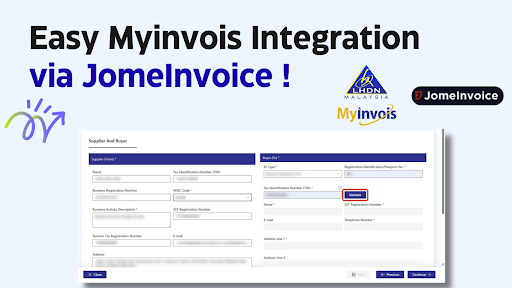
A practical guide for businesses ready to integrate with MyInvois Portal — and how JomeInvoice removes the technical hassle by handling API integration, compliance logic, and invoice submission on your behalf. JomeInvoice provides a ready-built integration that handles API connectivity, LHDN compliance, invoice submission, and post-issuance workflows such as refunds and self-billing.
Malaysia’s e-Invoice mandate has made MyInvois integration a real operational requirement — not just a compliance checkbox.
For many businesses, the first question isn’t whether to comply, but:
“Do we really need to build a custom integration just to connect to MyInvois?”
The short answer: No.
In this guide, we’ll walk you through:
- What MyInvois Portal integration actually means
- Why building your own e-Invoice integration is costly and risky
- How businesses can integrate existing systems without internal development
- A practical, compliant alternative using JomeInvoice
What Does It Mean to Integrate with the MyInvois Portal?
Integrating with the MyInvois portal means your business system can:
- Automatically submit e-Invoices to LHDN
- Receive validation results (approved / rejected)
- Generate compliant documents (Invoice, Credit Note, Debit Note, Refund Note, Self-Billing)
- Store and track e-Invoice status for audit purposes
In practice, this usually involves:
- API connections to MyInvois
- Mapping your internal data to LHDN-required fields
- Handling errors, rejections, and spec updates
This is where complexity — and cost — starts to grow.
Why Many Businesses Avoid Building Their Own MyInvois Integration
On paper, building a direct MyInvois integration sounds straightforward. In reality, it comes with several hidden challenges.
1. High Development & Maintenance Cost
A custom e-Invoice integration requires:
- Backend developers
- API maintenance
- Continuous updates when LHDN changes formats or rules
For most SMEs, this becomes a long-term cost, not a one-off project.
2. Frequent LHDN Specification Updates
MyInvois technical specifications evolve.
Every update means:
- Code changes
- Retesting
- Risk of non-compliance if updates are missed
Businesses without a dedicated tech team often struggle to keep up.
3. Data Validation & Rejection Risks
Even small issues can cause invoice rejection:
- Incorrect tax codes
- Invalid TINs
- Incomplete mandatory fields
Handling these errors manually increases operational friction and delays invoicing.
4. Compliance Risk Is Still on You
When you build it yourself:
- Compliance responsibility stays internal
- Any mistake may result in penalties or audit exposure
For many businesses, this risk outweighs the perceived control of a custom build.
The Smarter Myinvois Integration Alternative: Use a Certified e-Invoicing Middleware
Instead of building from scratch, many Malaysian businesses are adopting an e-invoicing middleware approach.
An e-invoicing middleware platform:
- Connects your existing system to MyInvois
- Handles API complexity and updates
- Ensures ongoing LHDN compliance
This allows businesses to focus on operations — not technical maintenance.
How JomeInvoice Enables MyInvois Integration Without Development for Malaysia Businesses
JomeInvoice is designed as an e-invoice middleware, not an accounting system.
That means you don’t need to change how your business already works.
1. Works with Your Existing Systems
JomeInvoice integrates with:
- POS systems
- ERP systems
- eCommerce platforms (e.g. WooCommerce, Shopify)
- Custom internal systems via structured data input
You continue issuing invoices as usual — JomeInvoice handles MyInvois submission.
2. No API Building Required
With JomeInvoice:
- No need to develop or maintain MyInvois APIs
- No need to monitor spec changes
- No technical onboarding required
All MyInvois logic is handled within the platform.
3. Built-In LHDN Compliance e-Invoicing Logic
JomeInvoice automatically manages:
- Required invoice fields
- Tax Identification Number (TIN)
- Credit Note, Debit Note, Refund Note workflows
- Self-Billing scenarios
This significantly reduces rejection rates and manual correction work.
4. Real-Time Validation & Status Tracking
Businesses can:
- Submit e-Invoices in one click
- Track approval or rejection status
- Store validated invoices for audit readiness
No more switching between systems or portals.
Who Is This Approach Best For?
Using an e-invoicing middleware like JomeInvoice is ideal if your business:
- Uses POS, ERP, or eCommerce systems
- Does not want to invest in in-house development
- Needs fast, compliant MyInvois onboarding
- Wants to reduce accounting and technical dependency
This applies to Malaysia retailers, service providers, eCommerce sellers, agencies, and multi-branch operations.
Common Question: Is This Still Compliant with LHDN e-Invoice?
Yes.
JomeInvoice submits invoices directly to MyInvois Portal and follows LHDN technical and regulatory requirements.
Businesses remain compliant without handling the technical layer themselves.
Final Thoughts: Compliance Without Complexity
Integrating with the MyInvois portal doesn’t have to mean:
- Hiring developers
- Rebuilding systems
- Managing APIs and spec changes
With the right approach, businesses can:
- Stay compliant
- Reduce operational burden
- Continue using their existing systems
You don’t need to build the integration yourself — you just need the right e-Invoice layer.
Next Step
If your business is exploring MyInvois integration and wants a simpler path to compliance, JomeInvoice provides a practical, system-friendly solution.
Learn how JomeInvoice – the best e-invoice software Malaysia that fits into your existing workflow — without accounting systems, without development, and without unnecessary complexity, while remaining fully MyInvois-compliant.
Why Businesses Use JomeInvoice for MyInvois Integration
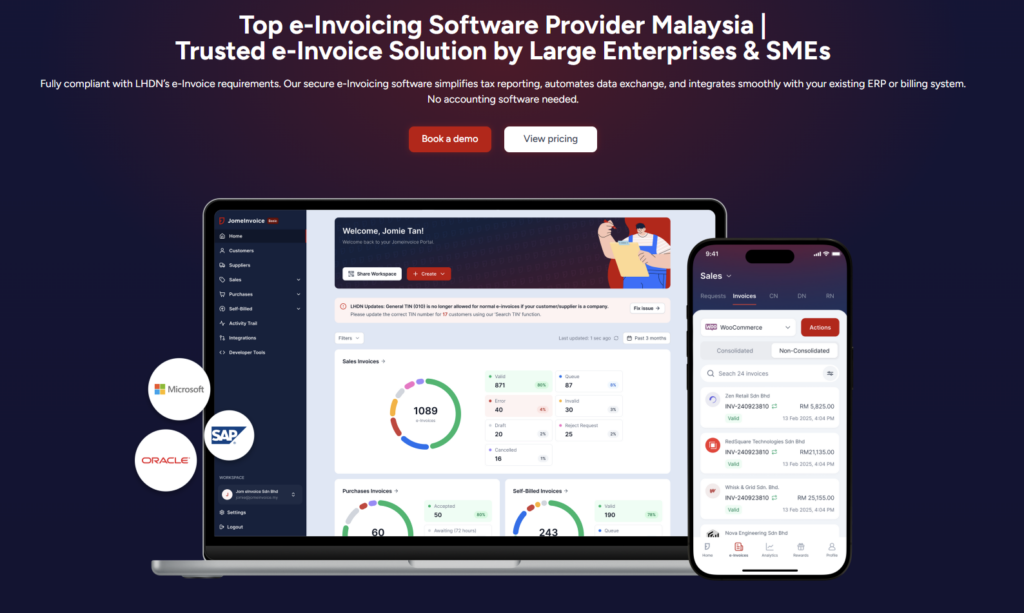
For businesses that want to integrate with the MyInvois portal without building and maintaining their own solution, JomeInvoice offers a practical and proven approach as a reliable e-invoice sofware for SMEs and large enterprises.
JomeInvoice is designed specifically to handle e-Invois submission and compliance, rather than replacing existing accounting, ERP, or POS systems. This allows businesses to meet LHDN e-invoicing requirements while continuing to operate with the systems and workflows they already use.
Key reasons businesses choose JomeInvoice include:
- Ready-built MyInvois integration
JomeInvoice manages API connectivity, data formatting, and submission logic, eliminating the need for internal development or ongoing technical maintenance. - LHDN-compliant by design
The platform incorporates required invoice fields, tax identification number (TIN) verification and support for credit notes, debit notes, refunds, and self-billing scenarios. - System-agnostic integration
JomeInvoice works alongside e-Invoice POS systems, ERP platforms, eCommerce e-Invoicing solutions, and internal business systems, making it suitable for both SMEs and larger organisations. - Operational simplicity
A central dashboard allows businesses to submit, track, and store validated e-Invoices without switching between multiple systems or portals. - Ongoing compliance support
As MyInvois specifications evolve, updates are managed within the platform, reducing compliance risk for businesses over time.
By acting as an e-invoicing middleware between business systems and the MyInvois portal, JomeInvoice enables businesses to comply efficiently — without adding accounting complexity or technical burden.