Jomeinvoice

Read Malaysia e-Invoice Compliance Update & e-Invoicing Integration Knowledge Hub

Stay updated with insights on e-invoicing in Malaysia. Learn how JomeInvoice supports secure and automated billing for SMEs, retailers, eCommerce sellers, and large enterprises. Explore practical guides on LHDN e-invoice rules, e-invoice integration, and e-invoicing solutions.

bann2 -
5 SST Adjustments in 2026. How Self-Billing Exposes Your Business Without e-Invoicing
SST adjustments 2026 explained. Learn how self-billing, SST Malaysia changes, and LHDN e-Invoice rules impact your compliance risk.
bann1 -
2026 LHDN e-Invoice Compliance Review Framework: Why Delaying e-Invoicing Is Now a Serious Risk
Learn how the 2026 e-invoice compliance review framework impacts businesses under the Malaysia e-invoice guideline. Understand einvoicing risks, selection criteria, audit scope, penalties, and why delaying your e-invoice implementation timeline increases exposure.
unnamed 56 -
LHDN e-Invoice Implementation Update: Full Changelog
A running changelog of every LHDN e-invoice implementation update, newest first: the RM3 million exemption threshold in General Guideline v4.8, the SVDP amnesty, the Phase 4 extension to 1 January 2028, relaxation period rules, and what each change means for your business.
unnamed -
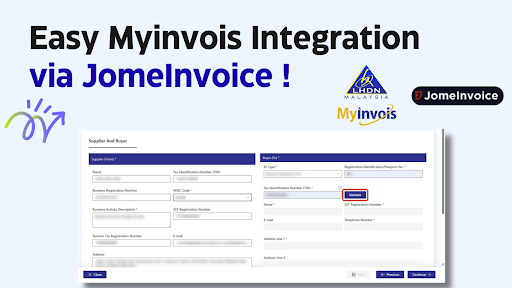
2026 Easy MyInvois Integration in Malaysia with Your Business System Using JomeInvoice — No Custom Build Needed
MyInvois integration is now a real operational requirement for Malaysian businesses under the e-Invoice mandate. This guide explains what MyInvois integration actually involves, why custom API builds are costly and risky, and how JomeInvoice provides a ready-built middleware solution to connect your current system to MyInvois—without custom development.
image 15 -
Step-by-Step Guide to Issuing a Self-Billed e-Invoice for Taobao Shipping to Malaysia
Imported goods in Malaysia now require a self-billed e-Invoice—especially for overseas purchases like Taobao. This step-by-step guide shows how to issue a self-billed e-Invoice in MyInvois, what to key in for supplier details, exchange rates, Classification Code 034, and how to handle K1 form scenarios for Taobao shipping to Malaysia.
image 12 -
How Exactly LHDN Uses e-Invoice to Detect Tax Avoidance in Malaysia
Malaysia’s e-Invoice system is more than a compliance requirement—it’s also a powerful tool LHDN uses to detect tax avoidance and fraud. This guide explains how e-Invoice data is cross-checked with customs records, MSIC and classification codes, and K1 import declarations to flag suspicious transactions—plus how businesses can avoid common compliance traps.
image 7 -
Self-Billed e-Invoice for Imported Services: Handling Google/Facebook Ads and Other Foreign Services in Malaysia
Imported services like Google Ads, Facebook Ads, and other foreign suppliers require self-billed e-Invoices in Malaysia. This guide explains when to issue a self-billed e-Invoice, the correct timing rules (after payment or supplier invoice), and how to manage withholding tax (WHT) reporting and payments to stay fully compliant in 2025/2026.
image 4 -
10 Transactions Exempt from Consolidated e-Invoice (Sept 2025 Update)
Starting 1 January 2026, Malaysia’s consolidated e-Invoice exemption list expands from 7 to 10 transaction categories. This guide explains which industries are affected—including automotive, aviation, luxury goods, construction, utilities, telecom, and RM10,000+ transactions—and what businesses must do to stay compliant under the latest e-Invoicing Malaysia updates.

Compliance E-Invoicing Checklist for Malaysian Businesses [2025/2026] | Jomeinvoice
Compliance E-Invoicing Checklist for Malaysian Businesses: A Comprehensive Guide to Ensure Full Compliance with E-Invoicing Regulations
Malaysia’s e-Invoicing mandate is rolling out in phases from 2024 to 2027, and businesses must prepare early to avoid compliance risks. This comprehensive checklist covers everything you need—from identifying your rollout phase and invoice types to choosing the right submission model (MyInvois Portal, API, or middleware), technical readiness, staff training, testing, and post-go-live monitoring.