Jomeinvoice

Akses Pusat Pengetahuan Pematuhan & Integrasi e-Invois Malaysia

Kekal terkini dengan pandangan dan maklumat berkaitan e-Invois di Malaysia. Ketahui bagaimana JomeInvoice menyokong pengebilan yang selamat dan automatik untuk PKS, peruncit, penjual e-Dagang serta perusahaan besar. Terokai panduan praktikal mengenai peraturan e-Invois LHDN, integrasi e-Invois dan solusi e-Invois.

E-invoice for F&B Malaysia — restaurant and cafe e-invoice compliance guide for 2026
E-Invoice for F&B Malaysia: Restaurant Guide 2026
Malaysian restaurants and food businesses above the LHDN revenue threshold must issue e-invoices — but the rules are more nuanced than most business owners realise. GrabFood and Foodpanda revenue is handled by the platform, not the restaurant. Dine-in and catering transactions are the owner's responsibility. And consolidated e-invoice is the practical solution for high-volume cash businesses that can't issue individual receipts for every customer. This guide covers everything F&B operators need to know for 2026 compliance.
Blog Banner 6
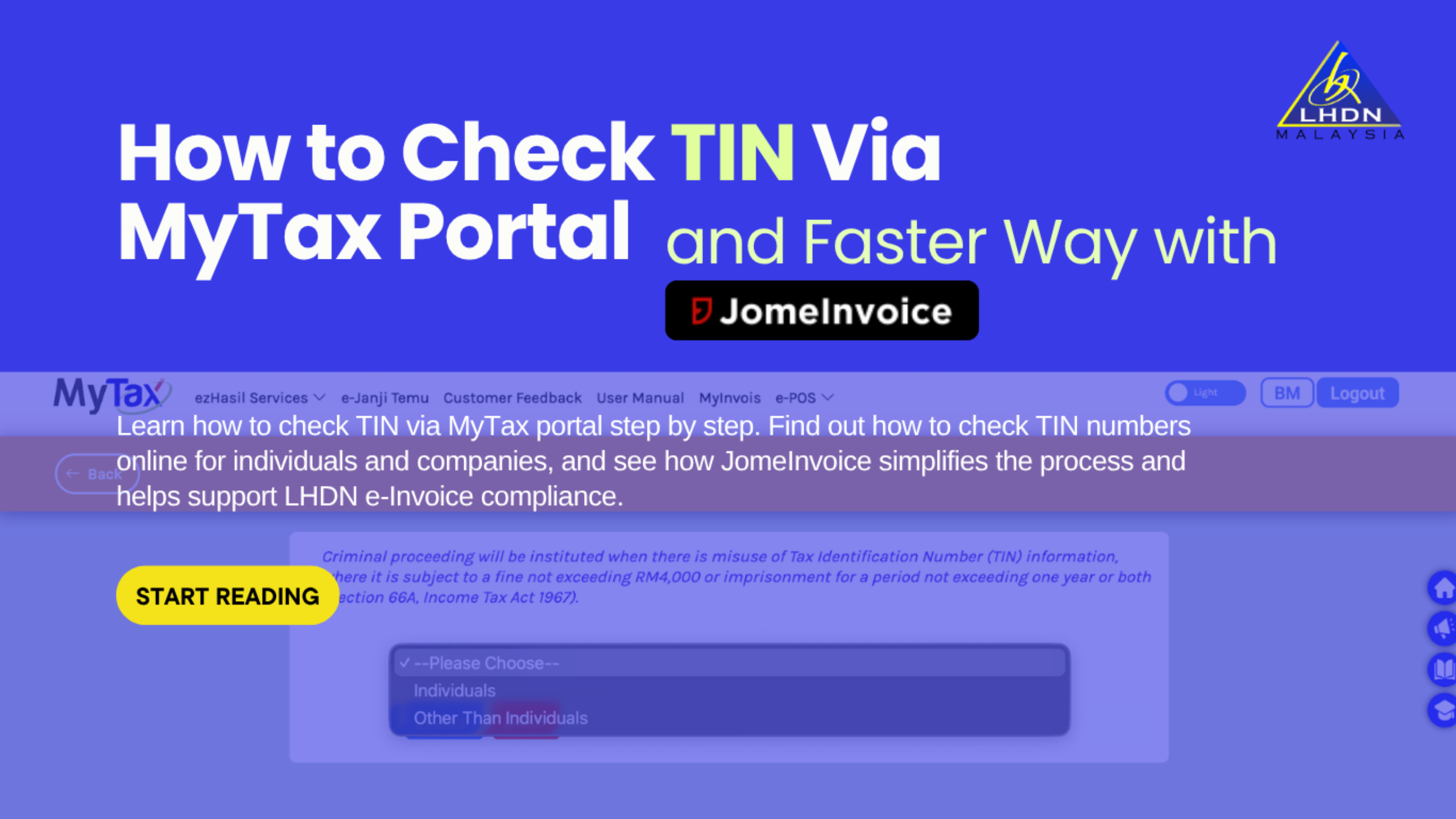
How to Check TIN Via MyTax Portal and Faster Way with JomeInvoice for LHDN e-Invoice Compliance
Learn how to check TIN via MyTax portal step by step. Find out how to check TIN numbers online for individuals and companies, and see how JomeInvoice simplifies the process and helps support LHDN e-Invoice compliance.
Blog Banner 5
4 Differences in e-Invoice Implementation With and Without the Grace Period in Malaysia
Learn the key differences in e invoice Malaysia rules with and without the grace period, including consolidated e-Invoice, self-billed e-Invoice, customer requests, and e-invoice system setup.
Blog Banner 4
CP58 Filing Guide: Self-Billed Income Still Requires CP58 Form in Malaysia [2026]
Learn why a self-billed e-Invoice does not replace the CP58 form in Malaysia. Understand the CP58 due date before 31 Mar 2026, self billing rules, LHDN e-Invoice requirements, and how to stay compliant.
Blog Banner 3
How to Handle Bank Charges and Interest with Self-Billed e-Invoices in Malaysia
Learn how bank charges, bank interest and self-billed e-invoice work under LHDN e-Invoice implementation rules in Malaysia.
Blog Banner 2 1
How to Issue Sales Commission Self-Billed e-Invoice via MyInvois Portal in Malaysia [2026]
Step by step MyInvois portal guide to issue sales commission self-billed e-Invoice under LHDN eInvoice Malaysia rules for agents and dealers. Discover a simpler way with JomeInvoice!
Blog Banner
Step-by-Step Guide to Issue e-Invoice for Disbursement and Reimbursement via MyInvois Portal in Malaysia [2026]
Step-by-step MyInvois portal guide to issue e-invoice for disbursement fee and reimbursement and the simpler way with JomeInvoice.
e-Invoice vs Tax Invoice Malaysia — key differences between LHDN e-invoice and SST tax invoice explained
e-Invoice vs Tax Invoice Malaysia: What’s the Difference?
Many Malaysian business owners assume that LHDN's new e-invoice requirement replaces their existing tax invoice — it does not. A tax invoice is an SST document required for Sales and Service Tax compliance. An LHDN e-invoice is a separate digital mandate under the Income Tax Act. If your business is both SST-registered and above the e-invoice revenue threshold, you need both — for the same transaction. This guide explains the difference, who needs what, and how the two documents coexist.
RM10,000 e-Invoice Rule Malaysia 2026 — LHDN individual e-invoice requirement for transactions above RM10,000
RM10,000 e-Invoice Rule Malaysia: Complete 2026 Guide
Any single business transaction of RM10,000 or more in Malaysia requires its own individual LHDN-validated e-invoice — it cannot be included in a monthly consolidated e-invoice. This rule has been in effect since January 1, 2026, applies to all mandated businesses, and is not suspended by the Phase 4 relaxation period. This guide explains who is affected, what counts as a single transaction, and the penalties for getting it wrong.